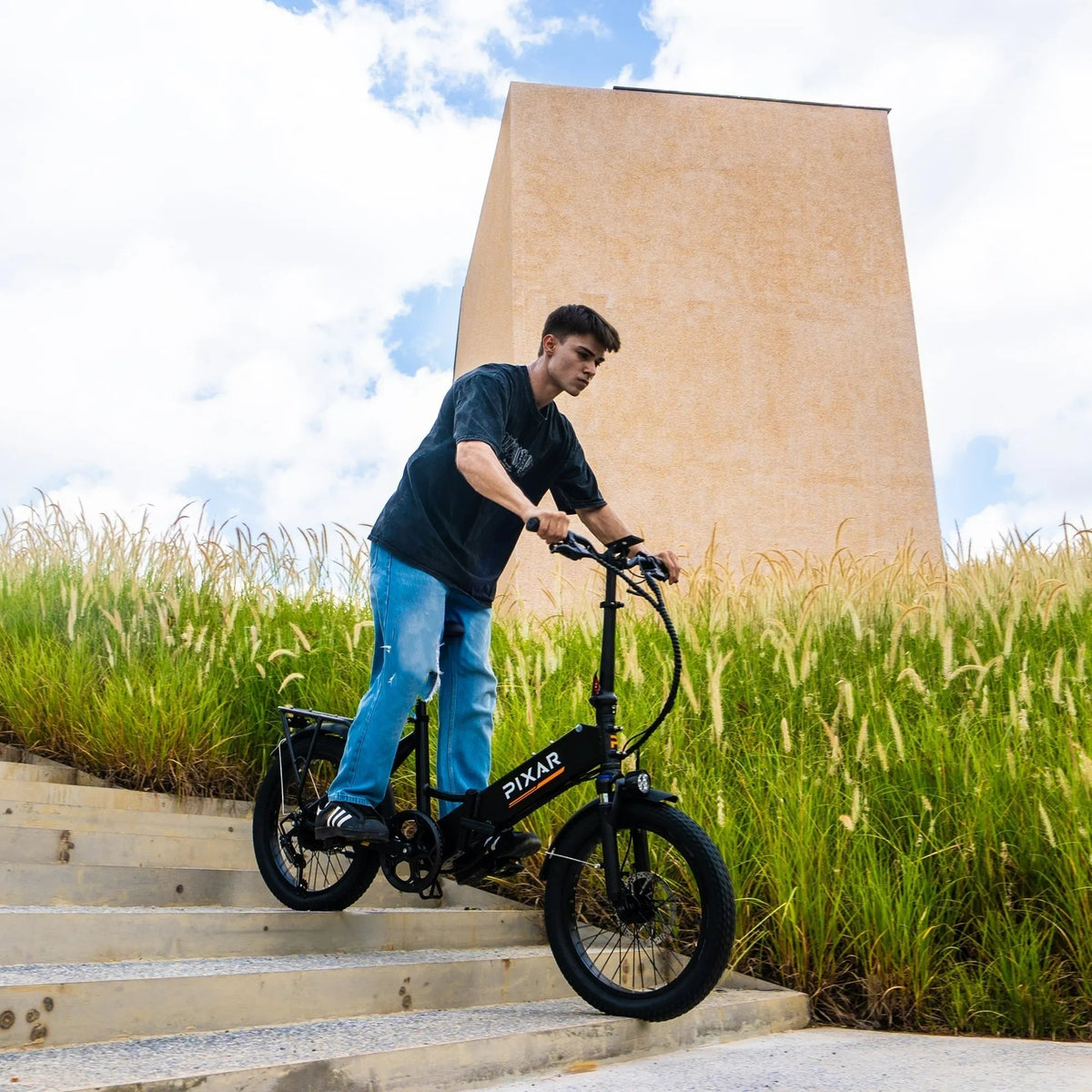


Choosing between an e-bike and a moped in Europe comes down to one practical question: do you need easy cycle access, or sustained motor-powered speed? For most urban trips, a standard Pedelec is easier to own and use. A moped makes more sense when your route is longer, road-based and you do not want to pedal.
Do not judge by appearance. A 25 km/h Pedelec, 45 km/h speed pedelec and electric moped can look similar but may require different licences, insurance, registration and road access. This guide shows which option fits your route and what to verify before buying.
E-Bike vs Moped in Europe at a Glance
For most short urban journeys, a standard pedal-assist e-bike offers simpler ownership and more route flexibility, while a moped provides more sustained speed without requiring the rider to pedal.
| Feature | Standard e-bike or Pedelec | Moped |
|---|---|---|
| Propulsion and speed | Pedal assistance, often up to 25 km/h | Motor propulsion, often up to 45 km/h |
| Legal treatment | Often treated as a cycle when compliant | Motor vehicle |
| Paperwork | Often lower, subject to country rules | Licence, insurance or registration commonly apply |
| Route access | Cycle routes may be available locally | Usually restricted to motor-vehicle roads |
| Best fit | Short and medium urban trips | Longer road trips needing sustained speed |
This table describes the common decision pattern, not a universal rule for every European country. A vehicle that exceeds the conditions for a conventional Pedelec can move into a different legal category even if it still has pedals and looks like a bicycle.
For a model-focused comparison of frame design, battery capacity and route suitability, see PIXAR’s moped-style e-bike guide.

Pedelec vs Moped Legal Categories
The European legal distinction between a Pedelec and a moped depends on how the vehicle is powered and classified, not on whether the seller calls it an e-bike.
The Pedelec threshold
A conventional Pedelec is designed for pedal-assisted travel. Under the current EU vehicle approval framework, pedal cycles with an auxiliary motor of no more than 250 W continuous rated power, assistance that stops when the rider stops pedalling, and assistance that cuts out before 25 km/h are excluded from the scope of Regulation (EU) No 168/2013.
The exact road-use treatment still depends on national and local rules.
The moped category
A moped sits on the motor-vehicle side of the comparison. In the EU L1e category, a two-wheel vehicle can have a maximum design speed of up to 45 km/h and continuous rated power up to 4 kW.
Vehicles that do not meet the powered-cycle criteria fall into the L1e-B two-wheel moped category. That classification brings a different approval and road-use framework from an ordinary bicycle.
What to check before buying
The practical test is therefore more useful than the product label. Before buying, check whether the vehicle requires the rider to pedal for assistance, the continuous rated power shown in the documents, the maximum design or assisted speed, and the approval documents for the country where it will be used.
Speed Pedelec vs Moped Rules at 45 km/h
A speed pedelec can look and feel like an e-bike because the rider still pedals, but assistance up to around 45 km/h commonly places it much closer to a moped in legal and practical terms.
Why 45 km/h changes the decision
The difference from a standard Pedelec is not a small upgrade in comfort. A speed pedelec may require a licence category, third-party insurance, registration or an insurance plate, an approved helmet and road use instead of ordinary cycle-lane access. The exact combination depends on the country.
Germany as a national example
Germany illustrates the distinction clearly. German federal transport rules treat a standard Pedelec with assistance that cuts out at 25 km/h as equivalent to a bicycle, while an S-Pedelec can reach 45 km/h and is treated as a light moped.
The S-Pedelec category carries helmet, licence, insurance and road-use obligations rather than ordinary bicycle access. These rules should not be copied automatically into France, the UK or another European market; they show why the category must be checked locally.
Great Britain uses separate EAPC rules
The UK uses its own EAPC terminology. A compliant EAPC must have pedals capable of propelling the cycle, a motor with no more than 250 W maximum continuous rated power and assistance that cuts out at 15.5 mph, or 25 km/h.
A non-compliant vehicle can be treated as a motor vehicle and may need registration, insurance, tax, an appropriate driving licence and an approved motorcycle helmet. The GOV.UK EAPC guidance is specific to Great Britain, so it is a national example rather than a Europe-wide rule.
The safest conclusion is simple: a 45 km/h speed pedelec is not just a faster ordinary e-bike. Treat it as a separate legal and purchasing decision.
E-Bike or Moped for Commuting?
An e-bike or moped for commuting should be chosen from the route outward: a cycle-friendly urban route usually favours the e-bike, while a longer road-based route may justify the moped’s higher sustained speed.
Short urban commutes
For a short city commute, an e-bike can be quicker in practice than its assisted-speed limit suggests. Protected cycle lanes, shortcuts, low-speed streets and easier parking can remove delays that a moped experiences while sharing the road with cars.
Traffic lights and junctions also reduce the real average-speed difference between the two vehicles.
An e-bike is especially useful when the route includes cycle infrastructure or when the destination has limited motor-vehicle parking. The rider can often bring the bike closer to the workplace and charge a removable battery indoors where permitted.
The rider may also continue pedalling if the battery is empty. Whether each action is allowed depends on the building, transport operator and local rules, so it should be treated as a practical possibility rather than a guarantee.
Longer road-based commutes
A moped becomes more compelling when the commute is long, road-based and exposed to faster traffic. It can maintain a higher motor-powered speed without asking the rider to contribute continuous pedalling effort.
That advantage is most valuable when the route has few cycle lanes, includes open roads outside the urban core, or makes the extra licence and insurance work worthwhile.
The decision can be summarised by route type:
- Short urban trips: an e-bike usually offers easier parking and lower administrative friction.
- Mixed urban and rural roads: compare the legal road category, traffic speed and whether cycle infrastructure is available.
- Long road-based commutes: a moped may provide a more consistent motor-powered pace.
- Routes with stairs or indoor storage: check vehicle weight, lifting points and storage access before choosing either option.
E-Bike and Moped Licence and Insurance in Europe
An e-bike and moped can have very different paperwork requirements, even when their purchase prices appear similar.
What commonly changes
For a compliant standard Pedelec, the common European pattern is bicycle-style treatment rather than motor-vehicle registration.
However, “no licence or insurance” should never be stated without checking the exact vehicle and country. Throttle operation, assistance above 25 km/h, power classification, local rules and the vehicle’s approval documents can change the answer.
A moped commonly requires several additional checks:
- The rider’s licence or AM entitlement.
- Third-party motor insurance.
- Registration or an insurance plate.
- The required helmet and safety equipment.
- Minimum rider age.
- Approved road use and lighting requirements.
France as a national example
In France, the AM category covers two- or three-wheel mopeds with a maximum speed of 45 km/h. French rules also require documentation and insurance for motorised two-wheel vehicles; the French government information on the AM licence sets out the licence conditions.
Check documents before purchase
The compliance check should happen before purchase, not after delivery. Ask the seller for the exact vehicle category, the maximum design speed, continuous rated power, approval or conformity documentation, and the documents needed to register and insure the vehicle in your country. A seller label that says “e-bike” is not enough evidence by itself.
Range, Charging and Daily Effort
Range is not a simple win for the moped because the useful comparison depends on route length, charging access, rider effort and what happens when the battery is empty.
When an e-bike battery runs low
An e-bike’s main advantage is that the motor works with the rider rather than replacing all rider input. On a short or moderate commute, that can reduce battery demand and make the available range practical for repeated daily trips.
If the battery is depleted, the vehicle may still be ridden as a bicycle, although weight, gearing and hills affect how realistic that is.
When a moped makes more sense
A moped generally makes longer motor-powered travel easier because the rider does not need to maintain pedalling effort. That convenience comes with a larger vehicle system, more demanding parking and potentially greater servicing or insurance obligations.
Electric mopeds also need a reliable charging routine; petrol mopeds need access to fuel and regular engine-related maintenance.
Why claimed range needs context
A stated range figure is a model-specific maximum claim rather than a guaranteed route result. Hills, rider and luggage weight, temperature, tyre pressure, stop-start traffic and assistance level can all change the result.
Compare the charging location and daily route before comparing headline range numbers.
E-Bike vs Electric Moped Cost
The cost difference between an e-bike and an electric moped is usually driven by recurring obligations rather than the sticker price alone.
| Cost category | E-bike | Electric moped |
|---|---|---|
| Purchase and energy | Bike price plus battery charging | Vehicle price plus charging or fuel |
| Insurance and registration | Often lower if treated as a cycle | Commonly adds mandatory cover and registration |
| Maintenance | Bicycle components and electrical system | Vehicle servicing, tyres and electrical system |
| Parking and security | More flexible, but still needs strong security | Motor-vehicle parking and security may be needed |
| Overall pattern | Lower recurring friction in many cases | Higher overhead in exchange for speed |
Recurring costs matter more than sticker price
An e-bike may cost less to keep on the road when it remains in the bicycle category, because registration and compulsory motor insurance are avoided.
A moped can still be better value for a rider whose route genuinely requires sustained speed, road stability or motor-only travel. The correct comparison is therefore total cost against the job the vehicle must perform, not purchase price against purchase price.
Build a country-specific estimate
Avoid using a single Europe-wide running-cost figure. Electricity prices, insurance premiums, registration fees, maintenance rates and tax treatment vary by country. If a budget matters, build the estimate from the local tariff and the exact vehicle documents rather than a generic European average.
PIXAR C1 Pro and M9 Product Examples
PIXAR C1 Pro and PIXAR M9 show two different ways an e-bike can be configured for everyday riding. The C1 Pro focuses on practical city use, while the M9 uses a moped-style layout with more capacity and comfort-oriented features.
Neither the frame style nor the product name decides the legal category. Check the exact technical documents and the rules in the country where the bike will be used.

PIXAR C1 Pro for urban practicality
The PIXAR C1 Pro is a low-step city e-bike with a 250 W rear motor, a maximum assisted speed of 25 km/h and 45 Nm of torque. Its 36V 18Ah Samsung battery provides a maximum range of up to 150 km.
The Shimano 7-speed drivetrain and hydraulic disc brakes support a practical urban setup. For an e-bike versus moped decision, the C1 Pro is the more bicycle-oriented example: it prioritises easy access, everyday handling and cycle-friendly use rather than sustained motor-vehicle speed.

PIXAR M9 for capacity and comfort
The PIXAR M9 is a moped-style e-bike with a 250 W rear-drive motor, a maximum assisted speed of 25 km/h and 60 Nm of torque. Its two 48V 17.5Ah batteries provide a maximum range of up to 240 km.
Its front and rear suspension, wide two-person saddle and retro-inspired layout make it a different physical proposition from a lighter city e-bike. This configuration may appeal to riders who value comfort, battery capacity and a more substantial riding position.
A Route Based Decision Checklist
The right choice between an e-bike and a moped depends on the route, legal obligations, storage conditions and how much motor-only travel you need.
Choose a standard e-bike when
- Your route is mainly urban and uses cycle infrastructure.
- You want minimal registration and insurance administration where the vehicle is legally treated as a cycle.
- You can charge at home, work or another permitted location.
- You are comfortable contributing pedal effort.
- Indoor storage, stairs or flexible parking matter more than sustained top speed.
Choose a moped when
- You need sustained motor-powered speed on roads.
- Your route has limited cycle infrastructure or extends beyond the urban core.
- You accept the licence, insurance, registration and helmet requirements that apply locally.
- You need a vehicle that behaves more like a motor vehicle than a bicycle.
Check before buying
Before buying either one, check these points in order:
- What legal category does the exact model fall into?
- What are its maximum design speed and continuous rated power?
- Does assistance require pedalling, and when does it cut out?
- Can you legally use the route, cycle lanes and parking areas you depend on?
- Where will you charge, store and secure the vehicle?
- What licence, insurance, registration and equipment will your country require?
Frequently Asked Questions
Is an e-bike a moped in Europe?
A compliant standard Pedelec is often treated as a bicycle, while a vehicle with higher assisted speed, different power characteristics or motor-only operation may be treated as a moped or another motor vehicle. The exact answer depends on the vehicle documents and the country where it is used.
Do you need a licence or insurance for an e-bike in Europe?
Many standard Pedelecs do not require the same licence, registration or motor insurance as a moped. That is not a blanket rule for every e-bike: check the assistance speed, continuous rated power, pedal operation and national classification before riding on public roads.
Is a 45 km/h speed pedelec a moped?
A 45 km/h speed pedelec is commonly regulated more like a moped than an ordinary Pedelec. It may require a licence, insurance, registration, a helmet and road use, although the exact requirements vary by country.
Is an e-bike or moped better for commuting?
An e-bike usually suits shorter urban commutes with cycle lanes, flexible parking and a willingness to pedal. A moped may suit longer, road-based commutes where sustained motor-only speed matters more than low administration and cycle-infrastructure access.
Can you ride an electric moped in a bike lane?
Usually not as a general assumption. Mopeds are normally treated as motor vehicles and may be restricted to roads, while cycle-lane access depends on the legal category and local rules. Check the traffic authority for the country and route concerned.
Are moped-style e-bikes automatically classified as mopeds?
No. “Moped-style” describes the appearance or layout, not the legal category. A product’s assistance speed, continuous rated power, pedal operation, approval documents and national rules determine how it can be used.
Final Words
For most European urban trips, a compliant standard e-bike is the simpler choice because it combines pedal assistance with lower administrative friction and better access to cycle-oriented routes. A moped earns its place when you need sustained motor-only speed, a longer road-based commute or a more motor-vehicle-like riding experience.
Before buying, classify the exact vehicle first, then check the licence, insurance, registration and road-access rules in your country. PIXAR C1 Pro and M9 can illustrate different e-bike configurations, but their appearance and product specifications should not be treated as a substitute for local legal verification.