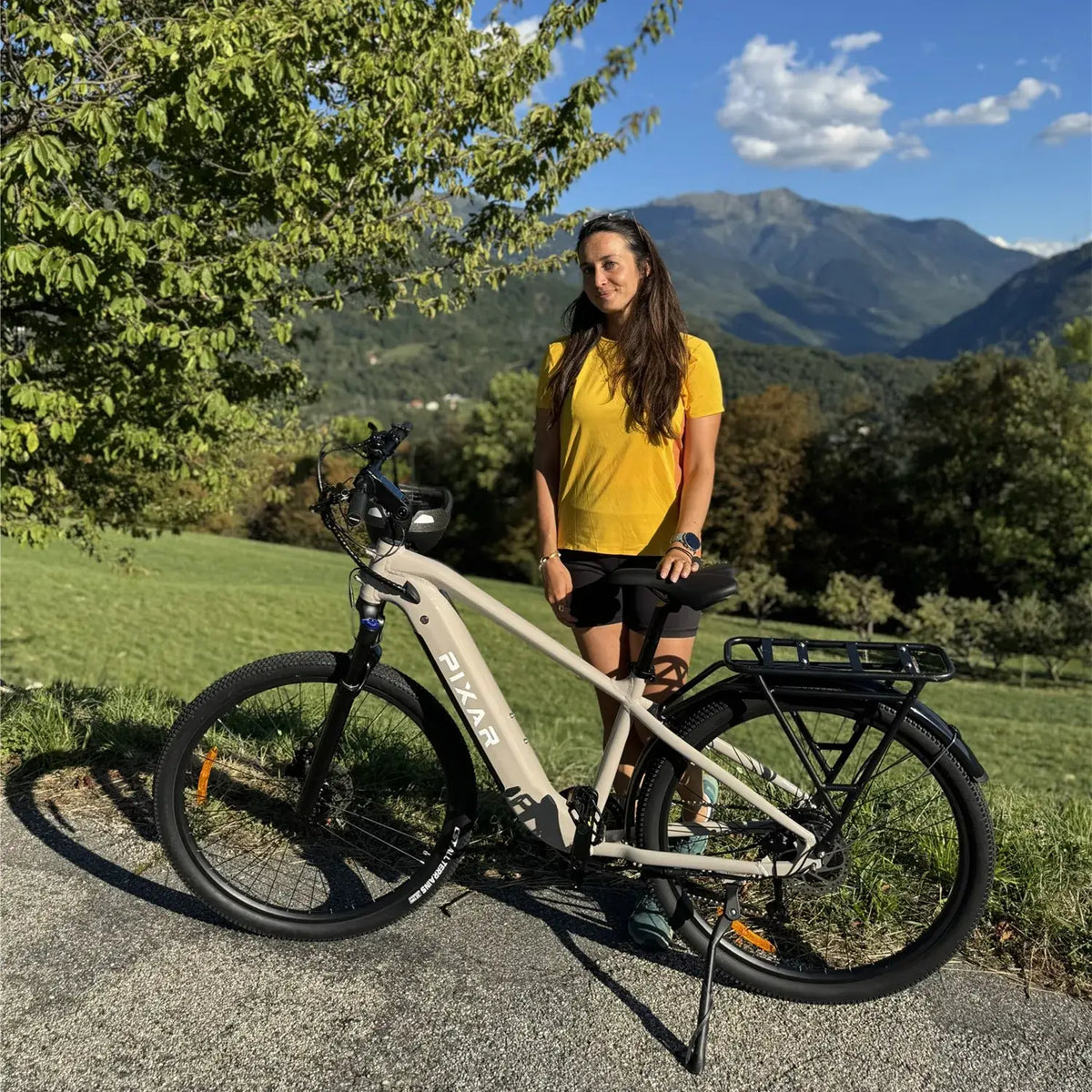


Clean an electric bike with the power off, a soft cloth and a mild cleaner suitable for its finish. Keep greasy drivetrain tools separate from the rest of the bike, avoid direct water spray on electrical components and let everything dry before switching it on or charging.
A dusty commute needs little more than a wipe. Mud, road salt and a gritty chain need different treatment. The important distinction is that frame cleaning, drivetrain cleaning and brake cleaning are separate jobs: a degreaser that helps one part can damage another.
First decide what actually needs cleaning
A full wash every time the frame gets dusty adds work and can strip useful lubricant from the chain. Start with the part that is dirty and keep the cleaning agent on that part:
| What you see | Clean this way | Keep away from |
|---|---|---|
| Dust or fingerprints on the frame | Wipe with a soft damp cloth. Use mild cleaner only where the dirt remains. | Drivetrain degreaser and abrasive pads. |
| Dried mud on the frame or mudguards | Hold a damp cloth on it to soften the grit, then lift it away with a soft cloth or brush. | Dry scrubbing, which can drag grit across the finish. |
| Sticky or gritty chain and gears | Clean the exposed chain and drivetrain with a separate brush and cloth; dry and relubricate an oil lubricated chain if needed. | Brake discs, pads, tyres and the rest of the bike. |
| Road salt after a wet ride | Remove residue promptly with a clean damp cloth, then dry the bike and check the chain. | Reusing a dirty cloth that spreads salt back onto clean areas. |
What you need before cleaning an electric bike
Set the bike upright on stable ground, disconnect the charger and switch the bike off. Let hot components cool before starting. Have these ready:
- A bucket of clean water and a mild bicycle cleaner compatible with the frame finish.
- A soft sponge or cloth for the frame and a soft brush for mud around tyres and mudguards.
- A separate brush and cloth for the oily chain and gears.
- A clean towel for drying, plus the correct chain lubricant if the chain needs it.
Keep the greasy cloth away from brake surfaces, grips and the saddle. Strong household degreasers, abrasive pads and solvent cleaners are not substitutes for a cleaner approved for the part you are washing.
Should you remove the battery?
Follow your bike manufacturer's washing instructions. If they specify removing a battery or display designed for user removal, do that first and keep the exposed mounting contacts dry. Use the specified protective cover where provided. Removing a battery does not make its empty mounting area safe to spray.
Do not dismantle an integrated battery, unplug motor wiring or remove a fixed display just to wash the bike. Wipe these areas with a well wrung cloth rather than directing water at them.
How to clean an electric bike: step by step
1. Soften mud before wiping the frame
Lift off loose debris with a soft brush. Hold a damp cloth against dried mud to soften it before wiping; dragging gritty mud across the paint can scratch the finish. Work from the handlebar and frame down towards the wheels, rinsing the cloth often so it does not carry grit back onto clean surfaces.
Use a small amount of compatible cleaner where needed, then remove the residue with a clean damp cloth. You do not need to soak the bike to remove a thin layer of road dirt.
2. Clean wheels, mudguards and the fork
Use the soft brush around tyre tread and inside accessible parts of the mudguards. Wipe the fork legs gently, including the exposed sliding surfaces on a suspension fork. Do not push dirt into seals or aim a water jet at wheel hubs, bearings or suspension seals.
Check for stones or packed mud rubbing against a mudguard. Remove only what you can reach safely with the bike stationary; routine cleaning should not require taking a wheel or suspension component apart.

3. Wipe electrical components without flooding them
Wipe the outside of the motor casing, display and battery housing with a lightly damp cloth. Do not spray into charging ports, battery connections or cable entry points. Leave correctly fitted covers closed during cleaning; do not lift them to wash underneath.
Rain resistance is not permission to use a pressure washer. A component's water resistance rating also does not establish that every connector and opening on the assembled bike can withstand a cleaning jet. Our guide to riding an electric bike in the rain covers wet rides separately.
4. Clean the chain without spreading oil onto the brakes
For an exposed, conventionally lubricated chain, wipe away surface dirt with a dedicated drivetrain cloth. If it remains gritty or coated in sticky deposits, use a bicycle drivetrain cleaner approved for the chain, keeping it confined to the drivetrain. Clean accessible dirt from the cassette and derailleur pulleys with the separate brush.
Keep the motor off throughout. Never use the throttle or assistance to pull the chain through a cloth or brush. Keep fingers and loose cloth clear of sprockets, and move the drivetrain by hand only with the bike safely supported and as its instructions allow.
Dry the chain before applying its specified lubricant. Apply it to the chain rollers rather than spraying the whole rear wheel, let it penetrate as directed, then wipe the outside of the chain to remove excess. A wet, oily exterior collects more grit.
A waxed chain, belt drive or enclosed chain system needs its own care procedure. Do not add oil to a belt or remove a bolted chain cover simply to follow a generic washing routine. Cleaning also cannot reverse wear: use our chain replacement guide if you need to assess the chain's condition.
5. Keep brake cleaning separate
Do not put chain lubricant, polish or drivetrain degreaser on brake discs, pads or rim braking surfaces. Disc brake pads can absorb contamination; wiping the visible rotor does not prove the pads are safe. Avoid touching the disc's braking track with bare or oily fingers. If a disc needs cleaning, follow the brake maker's specified method and use a separate clean cloth.
If your bike has rim brakes, wipe the rim's braking track and inspect the pads for embedded grit, using a clean cloth. Keep all chain products off both the rim and pads. Do not sand or scrape a pad as a routine cleaning step.
If oil reaches a pad, or braking is noticeably weaker after cleaning, stop riding and have the brake inspected. A brief noise from water or dirt can go away as parts dry, but continued noise together with reduced braking needs attention. Do not try to burn oil out of pads or ride harder to make it disappear.
6. Dry the bike and check it before riding
Towel off the frame, wheels and accessible component housings. Allow remaining moisture to dry naturally. Do not use a heat gun or compressed air to force moisture out of electrical parts.
Before refitting a removed battery, switching on or charging, check that its mounting area and charging connections are completely dry. There is no fixed waiting time that proves this. If water appears to have entered an electrical component, leave the system off and seek model specific advice.
Use this short check to decide whether the bike is ready to ride or needs attention first:
| Check | Normal result | If it is different |
|---|---|---|
| Battery and charging area | Battery is secure; port cover is closed; contact area is dry. | Do not refit or charge if the connection area is wet. Let it dry and get model specific support if water may have entered. |
| Brakes | Levers feel familiar and the bike slows predictably during a walking pace check. | Do not ride in traffic with weaker braking. Persistent squeal or a changed lever feel needs inspection. |
| Wheels and drivetrain | Wheels turn without new rubbing; the chain is dry enough not to fling oil and shifts as before. | Look for a displaced mudguard or trapped debris. If the chain remains gritty, clean it separately; do not add oil to mask a noise. |
| Display, controls and lights | They respond as they did before cleaning. | If they are erratic or show a new error, switch off and consult the bike maker or service shop rather than repeatedly cycling the power. |
These checks do not diagnose an electrical fault or brake condition. They help catch a change before you rely on the bike in traffic.
Can you pressure wash an electric bike?
Avoid pressure washing as a general cleaning method. A concentrated jet can drive water past seals and into bearings or electrical components. Moving the nozzle farther away does not give every bike a safe pressure washing distance.
Use the method specified for your bike. For the PIXAR C1, the instruction is explicit: no pressure washer and no immersion. A damp cloth, mild detergent and towel drying are the prescribed approach.
How to clean an ebike without a hose
A bucket and cloth are enough for routine cleaning in a small space. Choose a permitted area with a protected floor or suitable tray, and keep dirty water away from electrical sockets.
- Remove loose dirt where it can be collected. Soften remaining mud with a damp cloth instead of pouring water over the bike.
- Clean the frame with one cloth, then use a second cloth dampened with clean water to remove cleaner residue. Change dirty water rather than spreading it around.
- Work on the drivetrain separately and catch drips. Collect greasy residue and dispose of cleaning waste according to the product instructions and local requirements.
Dry the bike before putting it back into storage. For everyday dust, the frame wipe may be all that is needed; a full drivetrain degrease is not part of every wash.
How often should you clean an electric bike?
Use the visible dirt and riding conditions as your cue, rather than a rigid weekly wash. Wipe dust when it builds up, remove mud and road salt after wet or dirty rides, and clean the drivetrain when the chain is visibly gritty or sticky. You do not need to degrease a clean chain just because you wiped the frame.
Cleaning and everyday care on the PIXAR C1
The C1's chain guard helps shield clothing from the drivetrain, a useful detail for everyday trips. It does not make the chain maintenance free: the rear gears and derailleur still need attention.

The C1 EU owner's manual, Care & Maintenance on page 23, specifies a damp cloth with mild detergent, towel drying and no direct spray on the display, motor hub or battery ports. It also specifies cleaning and lubricating the chain every 150–300 km, with excess oil wiped away. That interval is for the C1; inspect sooner after muddy or wet rides rather than waiting for a mileage target.
If you are comparing bikes for a regular commute, browse our electric bikes to see the available styles and equipment. The PIXAR C1 product page shows the chain guard, mudguards and everyday equipment in more detail; you can also read its manual before ordering to understand its care requirements.
Frequently asked questions
Can I use washing up liquid to clean an electric bike?
A mild detergent may be suitable where your bike's instructions allow it, but household products vary. Avoid strong degreasers, solvents and abrasive cleaners. A bicycle cleaner approved for the frame finish removes that guesswork; use it at the stated dilution and wipe away residue.
Does the chain need oil after every wash?
Not after every light frame wipe. If cleaning has removed the lubricant from an oil lubricated chain, let it dry, apply the specified chain lubricant and wipe off excess. Waxed chains and belt drives need different care, so do not apply chain oil indiscriminately.
Can I use a garden hose instead of a pressure washer?
Only if your bike's cleaning instructions allow it. A garden hose is not automatically safe around electrical connections, bearings or seals. Keep water away from those areas and use a damp cloth where the instructions call for wiping, as they do for the PIXAR C1.
When can I charge the battery after cleaning?
Charge only when the battery exterior and charging connections are dry and the battery is at the charging temperature specified by its manufacturer. Do not rely on a fixed drying time. If water may have entered the battery or port, do not connect the charger; have the system checked first.