


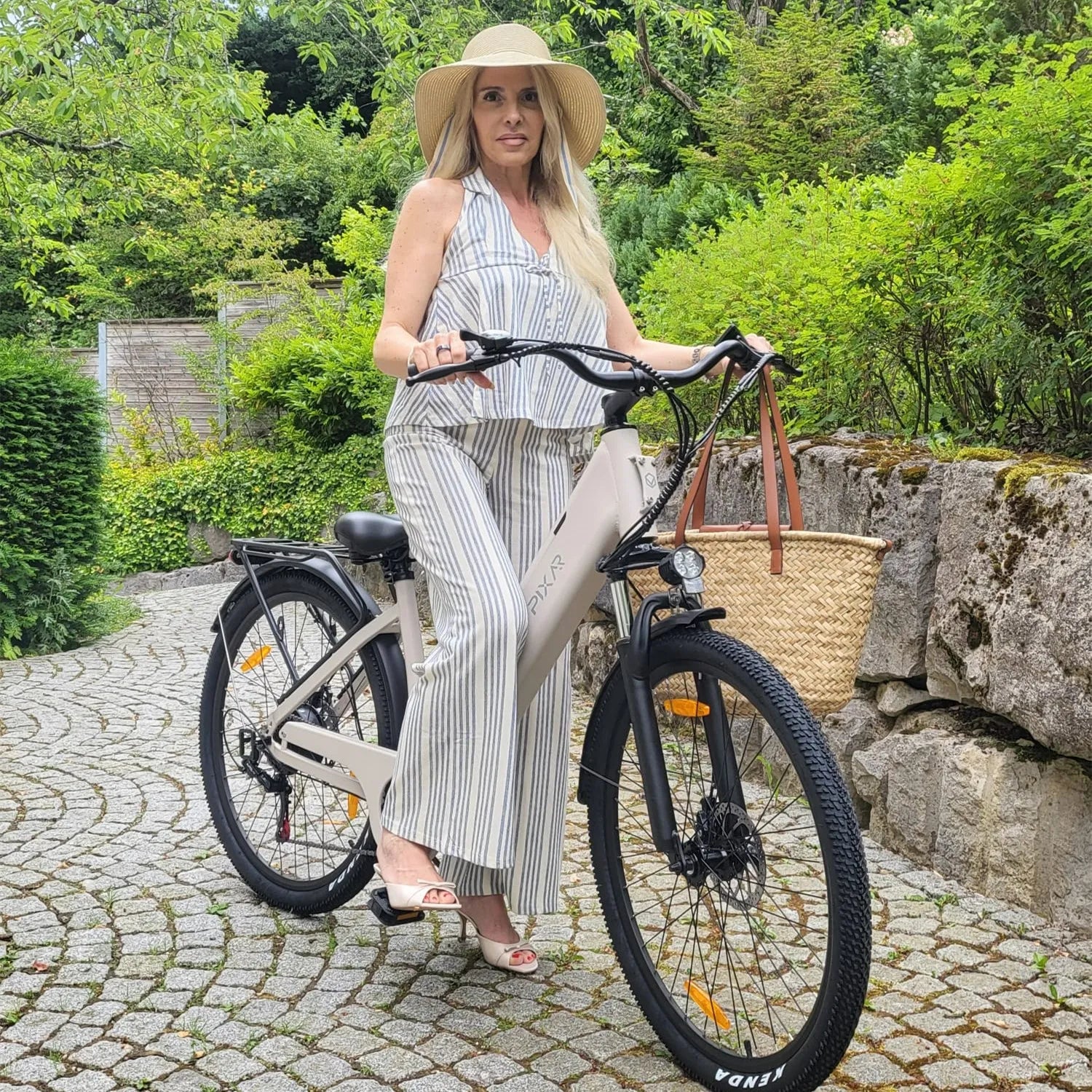
A lightweight e-bike should make the entire journey easier, including the moments when the motor is not assisting. Parking in a narrow hallway, loading a car and moving through a doorway can matter as much as the number shown on a specification sheet.
For women comparing practical everyday formats, PIXAR offers two distinct options around the 26 kg range. The PIXAR Rusher weighs 26.1 kg and folds for compact storage, while the PIXAR Cruiser weighs 26.4 kg and uses a full-size low-step city frame with comfort-focused suspension. This guide explains which model better matches different routes, riders and storage arrangements.
What Defines the Best Lightweight Women’s E-Bike in 2026?
The best lightweight women’s e-bike is the model an individual rider can control, park and store across a normal day. This guide uses the approximately 26 kg range as its practical comparison scope for the fully equipped Rusher and Cruiser; it is an editorial category for these two models, not a universal industry definition.
Published bike weight is the starting point. Rusher is listed at 26.1 kg and Cruiser at 26.4 kg, a difference of only 0.3 kg. That small gap makes frame format and storage needs more useful decision factors than ranking the bikes by weight alone.
Five questions define practical lightweight performance in this comparison:
- Can the rider control the bike while walking and parking it?
- Can it pass through the home’s narrowest doorway or lift?
- Does it need to fit inside a car or restricted storage area?
- Can the battery be removed for charging or a separate lift?
- Do the frame dimensions suit the intended rider?
The initial choice is straightforward. Choose Rusher when folding and compact storage are essential; choose Cruiser when full-size city comfort matters more than reducing the stored dimensions.
The word “women’s” describes the search need rather than a universal body type. Both PIXAR models use low-frame designs that can simplify mounting, but saddle height, handlebar reach and low-speed control still need to match the individual. A useful shortlist therefore begins with the rider and route before comparing motor or battery figures.
Why Lightweight Women’s E-Bike Weight Is Only Part of Portability
Lightweight women’s e-bike comparisons often compress several different measurements into one number. Net bike weight should describe the assembled bicycle, battery weight describes a removable component, and shipping weight may include packaging and accessories. They are not interchangeable.
Accessories also change what the rider handles. A basket, rack bag, lock and shopping load can make a manageable e-bike cumbersome at the end of a journey, even though none appears in the headline bike weight. When lifting matters, compare the complete intended setup rather than the lightest product-page configuration.
Folding creates a separate benefit. A folding frame can shorten the package enough for a cupboard, lift or vehicle, but the hinge does not remove mass. In practice, a compact 26 kg package may fit a space that a full-size 26 kg city bike cannot, while still being too heavy for comfortable daily stair carrying.
Before ordering, audit the complete route from storage to street:
- Count every stair and threshold the bike must cross.
- Measure the narrowest doorway, lift and storage opening.
- Measure the car-boot opening, not only its floor area.
- Estimate how far the bike must be pushed with assistance switched off.
- Check whether the battery can be removed before lifting.
This storage-to-street audit turns “lightweight” into a decision that can be checked. If the route includes a daily two-floor carry, neither folded dimensions nor a small difference between two published weights should substitute for a real lifting assessment.
PIXAR Rusher as a Folding E-Bike for Women
Best for Compact Storage and Car Travel
PIXAR Rusher is a folding e-bike for women and other riders whose main constraint is storage volume. Its published folded dimensions are 84 × 51 × 79 cm, which provides a concrete starting point for checking a car boot, hallway cupboard or lift.
Rusher’s published folded size should be tested against the narrowest opening, not only the destination space. A boot may have enough floor area but an opening that is too low, while a cupboard may accept the folded dimensions yet leave no room to rotate the bike into position. Cardboard or masking tape can mark the three dimensions before purchase.

Rusher Specifications and Carrying Limits
Rusher pairs its folding frame with a 250W BAFANG rear motor, 45 Nm of maximum torque and a removable 48V 12.8Ah Samsung battery. PIXAR states a maximum assisted range of 120 km. This is an official maximum rather than a personal route forecast; assistance level, gradients, temperature, rider weight and cargo can change the distance available from a charge.
PIXAR Rusher uses a seven-speed drivetrain, front suspension and 180 mm mechanical disc brakes for everyday control. Front and rear lights plus turn indicators add practical visibility features, although riders must still confirm that the delivered equipment and configuration meet the requirements for their intended use in Germany.
Rusher’s main specification currently lists a 26.1 kg e-bike net weight and a 3.5 kg removable battery. Removing the battery reduces the mass handled in a separate lift, but the remaining folded bike is still substantial; folding improves storage more clearly than it improves carrying.
Rusher makes the most sense for camping, car-based trips and homes where floor space is scarce but the bike does not need to be carried up several flights every day. If frequent lifting is unavoidable, the rider should handle a similarly weighted folded bike before assuming that the compact shape will be comfortable.
PIXAR Cruiser and the Lightweight City E-Bike Trade-Off
Best for Everyday City Comfort
PIXAR Cruiser illustrates the central lightweight city e-bike trade-off: equipment that improves everyday comfort can also add mass and storage length. Its current specification lists a 26.4 kg bike weight, placing it close to Rusher by the headline number but in a very different full-size format.
Cruiser’s low-step frame reduces the height through which a rider moves a leg when mounting or dismounting. This format can help on an urban route with repeated stops, although it does not prove that the saddle height or handlebar reach will fit every rider.

Cruiser Specifications and Storage Requirements
Cruiser uses a 250W rear-wheel motor with 45 Nm of maximum torque and a removable 36V 12.8Ah battery. Its official stated maximum range is 120 km. As with Rusher, that figure should be treated as a manufacturer maximum and compared with the complete return journey rather than interpreted as a guaranteed distance.
Cruiser’s comfort-oriented specification separates this lightweight city e-bike candidate from a minimalist urban model. PIXAR lists adjustable front suspension, a rear suspension element and 27.5 × 2-inch tyres. Those components suit patched asphalt and uneven city surfaces, but they also help explain why Cruiser is not an ultralight bicycle.
Cruiser’s full-size frame brings a second constraint because the bike does not fold. Cruiser is better aligned with ground-floor storage, a garage or a building with a suitable lift than with a narrow cupboard or small car boot. The removable battery can simplify indoor charging and reduce some lifting load, but the remaining bike still needs to be manageable.
Choose Cruiser when low-step access, city comfort and straightforward daily use matter more than compact storage. Riders who must repeatedly load the bike into a vehicle or negotiate tight indoor turns should compare those movements with Rusher before choosing on ride specification alone.
Which PIXAR Model Better Matches a Lightweight Commuter E-Bike for Women?
A lightweight commuter e-bike for women should solve the most difficult part of the actual commute. Rusher is the stronger match when that difficulty is restricted storage or vehicle transport; Cruiser is the more direct answer when the route begins at accessible storage and comfort is the priority.
Rusher vs Cruiser at a Glance
| Comparison point | Rusher | Cruiser |
|---|---|---|
| Format | Folding | Full-size city |
| Listed bike weight | 26.1 kg | 26.4 kg |
| Battery | 48V 12.8Ah | 36V 12.8Ah |
| Official max range | 120 km | 120 km |
| Primary advantage | Compact storage | City comfort |
Best for Different Commuting Scenarios
The 0.3 kg difference between Rusher and Cruiser is too small to establish that one model will be easy to carry and the other difficult. Frame shape, handhold position and whether the folded package can remain close to the body may matter more during a lift.
For a commute that includes a train, the folding format may reduce obstruction, but transport rules and lift access still need checking. For a direct home-to-work ride, Cruiser avoids a folding step and provides a full-size city setup with front and rear suspension.
Use the following scenario match as a first filter:
- Limited storage or regular car travel: Rusher.
- Urban riding with accessible storage: Cruiser.
- Daily stair carrying: test the intended lifting movement before selecting either model.
- Uneven city surfaces: compare Cruiser’s comfort equipment with the storage advantage of Rusher.
Best E-Bike for Short Women and the Fit Measurements That Matter
The best e-bike for short women must fit before its battery, motor or official range becomes useful. A low-step frame can reduce the effort required to mount, but it does not show whether a shorter rider can reach the ground, handlebars and brake levers with control.
Five Fit Measurements for Shorter Riders
Recommended rider-height ranges are screening tools rather than complete geometry. Two riders of the same height can have different inseams, torso lengths and arm reach, so a single height range cannot confirm an appropriate position.
Ask for five measurements before ordering an e-bike for a shorter rider:
- Standover height: the clearance needed when standing over the frame.
- Minimum saddle height: measured from the ground with the seat at its lowest safe position.
- Handlebar reach: the horizontal distance that affects how far the rider stretches forward.
- Crank length: relevant to knee and hip movement through each pedal rotation.
- Complete net weight: the mass the rider must push, park or lift.
Low-Speed Handling Before You Buy
A shorter rider should also check low-speed control. Starting, stopping, making a tight turn and walking the bike safely through a doorway reveal fit problems that may not appear while riding steadily with motor assistance.
Neither Rusher nor Cruiser should be described as suitable for every short woman without those checks. The better model is the one that lets the individual rider operate the controls, maintain a comfortable posture and manage the bike when the motor is not helping.
Lightweight Step-Through E-Bike Fit and Frame Design
A lightweight step-through e-bike combines two separate characteristics: a lower frame opening and a mass the rider can manage. The step-through format can make repeated mounting and dismounting easier, but it does not automatically reduce weight.
Step-Through Frame Weight and Balance
Removing or lowering the traditional top tube changes how loads pass through the frame. Manufacturers may use larger tubes or additional structure to achieve the required stiffness, so a step-through frame can weigh as much as or more than a comparable step-over design. Battery size, suspension, racks and tyres then add their own trade-offs.
Weight placement can be as important as the total on a lightweight step-through e-bike. A centrally positioned battery may help a bike feel balanced while it is being ridden, whereas a high or rearward load can become noticeable during walking and parking. A product page rarely communicates lifting balance, which is one reason a handling check remains valuable.
Both PIXAR models use a low-frame format, but their structures serve different needs. Rusher adds a folding joint and compact folded package; Cruiser retains a full-size city frame and combines it with suspension. The step-through opening makes neither model women-specific, and the most useful benefit is practical access for any rider who prefers a lower mounting movement.
Test-Ride Checks for a Step-Through E-Bike
During a test ride, check more than forward comfort. Stop on a slight incline, restart without wobbling, turn through a slow figure of eight and walk the bike around a tight corner. Those movements show whether the frame, controls and weight distribution work together for the intended rider.
Women’s E-Bike Buying Guide for Everyday Riding in Germany
This women’s e-bike buying guide starts with the daily route because the same bike can be practical in one German household and frustrating in another. Work through the decisions in order instead of beginning with the largest battery or the smallest published weight.
Seven Checks Before Ordering
- Map the complete return journey. Include gradients, poor surfaces, cargo and the distance between charging opportunities.
- Trace the storage route. Record stairs, doors, lifts, corridors and the space required to turn the bike.
- Measure the intended rider. Compare inseam and reach with actual frame dimensions rather than relying only on a height recommendation.
- Check the battery arrangement. Confirm whether it is removable, where it can be charged and what must still be lifted after removal.
- Compare everyday equipment. Brakes, lights, suspension, racks and mudguards may be more valuable than saving a small amount of weight.
- Verify the delivered configuration. Check the current product page and order documents for the version supplied to Germany.
- Arrange a handling check. When possible, test low-speed turns, pushing, parking and the specific lifting movement required at home.
German Pedelec Requirements
Germany’s StVZO Section 63a treats an electrically assisted cycle as a bicycle when, among other conditions, its maximum continuous rated motor power is 0.25 kW. Assistance must progressively reduce and stop at 25 km/h or when the rider stops pedalling.
PIXAR lists Rusher and Cruiser with 250W motors and assistance up to 25 km/h. German buyers should use the compliant delivered configuration and should not infer the legality of optional controls or modifications from a product description.
The final choice in this women’s e-bike buying guide is therefore route-specific. Rusher addresses restricted storage with a folding frame, while Cruiser addresses everyday urban comfort with a full-size low-step design. Neither advantage removes the need to check weight, fit and the delivered road configuration.
Best Lightweight Women’s E-Bike FAQ
Is PIXAR Rusher lighter than Cruiser?
Rusher’s headline specification currently lists 26.1 kg, compared with 26.4 kg for Cruiser. The 0.3 kg difference is too small to prove that Rusher will be easy for a particular rider to lift.
What counts as a lightweight women’s e-bike?
No universal legal or industry weight limit defines a lightweight women’s e-bike. This guide compares two fully equipped PIXAR models in the approximately 26 kg range, then judges practical manageability through storage, lifting frequency, battery removal and rider fit.
Is a folding e-bike always lightweight?
No. A folding frame reduces the dimensions of the stored package, but the motor, battery, wheels and frame still determine its mass. Check both the folded measurements and the complete net weight before treating a folding model as portable.
Is Rusher or Cruiser better for everyday city riding?
Cruiser is better aligned with riders who prioritise a full-size city format, low-step access and front-and-rear suspension. Rusher is the stronger option when the daily routine includes restricted storage, camping or regular vehicle transport.
Are Rusher and Cruiser suitable for shorter women?
Both use a low-frame format, but that feature alone cannot establish fit for a shorter rider. Confirm minimum saddle height, standover height, reach and low-speed control before choosing either model.
Are the 120 km range figures guaranteed?
No. The 120 km figures are PIXAR’s official stated maximum ranges rather than guaranteed distances for every journey. Actual range can vary with assistance level, terrain, temperature, rider weight and cargo.
Final Word
The best lightweight women’s e-bike for this two-model PIXAR comparison is determined by the rider’s most difficult everyday constraint. Choose Rusher when folding storage and vehicle transport matter most; choose Cruiser when accessible storage allows a full-size city bike and comfort is the higher priority.
Both models sit in the approximately 26 kg comparison range used throughout this guide, but their formats solve different problems. Measure the rider, trace the storage-to-street route and verify the current product specifications before buying. Those checks provide a more dependable answer than relying on a single headline number.
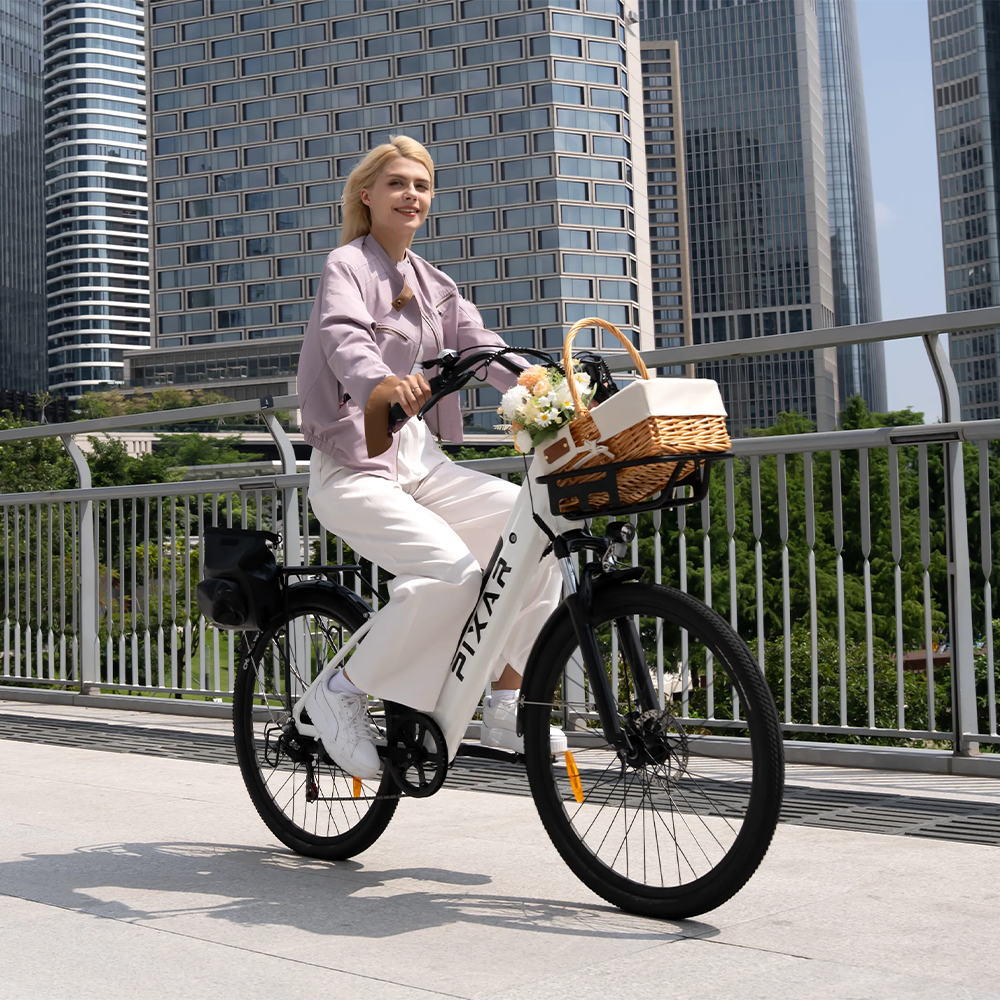






Leave a comment
This site is protected by hCaptcha and the hCaptcha Privacy Policy and Terms of Service apply.