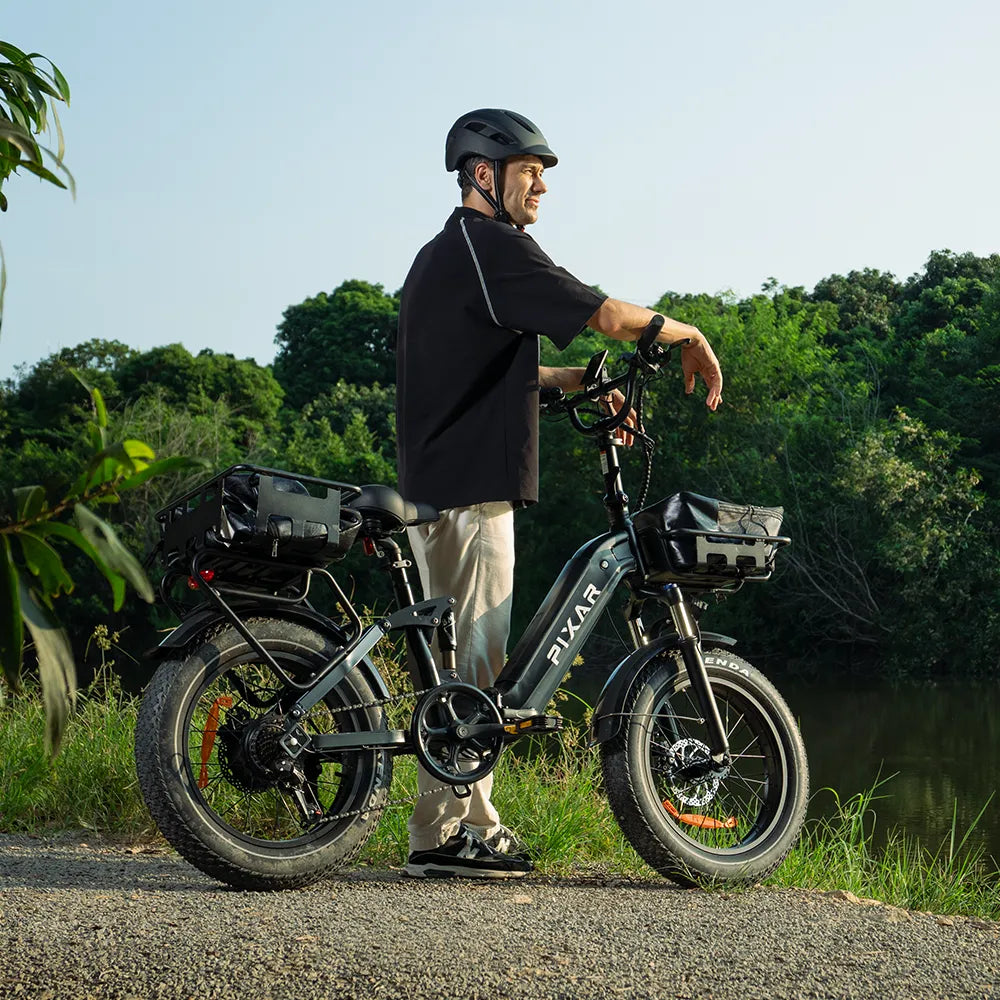


Pedal assist is the feature that makes an electric bike feel easier to ride while you continue turning the pedals. It does not simply switch the motor on at full power. The bike detects your pedalling, checks the assistance level you selected and uses the controller to decide how the motor should respond.
Understanding that sequence makes it easier to choose an electric bike, use its assistance levels well and recognise what is normal. It also explains why two bikes with similar motor ratings can feel very different on the road.
What is pedal assist on an electric bike?
Pedal assist, often shortened to PAS, is a system that adds motor support while the rider pedals. You still provide some of the effort, but the motor helps reduce the work required to start, climb or maintain a comfortable pace.
Most systems let you choose from several assistance levels on the display. A low level provides gentle support and leaves more of the work to you. A higher level asks the motor for more help, subject to the bike's programming, available battery power and legal assistance limit.
Pedal assist is not the same as the bicycle's mechanical gears. The assistance level changes how much electrical support the motor provides. The gears change the mechanical relationship between your pedalling and the rear wheel. Using both correctly produces a smoother ride than relying on either one alone.
How does pedal assist work?
Several parts complete the process every time you pedal:
- You begin pedalling. A sensor detects movement, pedal pressure or another input used by the drive system.
- The sensor sends a signal. This tells the controller that assistance may be required.
- The controller interprets the request. It considers the selected assistance level, sensor input and system limits.
- The battery supplies electrical energy. The controller regulates how that energy reaches the motor.
- The motor adds support. Its power helps turn the wheel or drivetrain while you continue pedalling.
- The system keeps checking your input. Assistance changes or stops when you ease off, stop pedalling, reach the assistance limit or apply a brake fitted with motor cut-off protection.
This happens repeatedly as you ride. The sensor and controller calibration influence how quickly assistance starts, how smoothly it builds and how naturally it fades.
What does each part of the system do?
| Component | Role in pedal assist | What the rider notices |
|---|---|---|
| Pedal sensor | Detects pedalling movement, force or another defined input. | How soon and how progressively the motor responds. |
| Controller | Processes signals and regulates power from the battery to the motor. | The strength and smoothness of each assistance level. |
| Battery | Stores the electrical energy used by the drive system. | How long assistance remains available between charges. |
| Motor | Converts electrical energy into mechanical support. | The added push during starts, cruising and climbs. |
| Display and controls | Let the rider select a level and view relevant ride information. | Direct control over the amount of requested support. |
| Brake cut-off | Stops motor assistance when a fitted brake lever sends a stop signal. | Prompt motor cut-off when braking. |
No single component creates the complete riding feel. Motor, sensor, controller calibration and gearing all need to work well together.
What do pedal assist levels mean?
Assistance levels are steps that let you choose how much support you want. They are not universal power percentages. Level 3 on one electric bike may not feel or behave like level 3 on another.
A typical system may work broadly like this:
| Setting | Typical use | Riding approach |
|---|---|---|
| 0 or Off | Riding without motor assistance. | Useful when handling the bike or when you want to pedal entirely under your own power. |
| Low | Flat routes, crowded paths and gentle exercise. | Provides light support and usually places less demand on the battery. |
| Medium | Everyday commuting and changing terrain. | Balances rider effort, pace and battery use. |
| High | Hills, headwinds, heavy loads or short periods of extra help. | Provides stronger support and generally uses energy more quickly. |
The exact number and behaviour of the levels depend on the model. Both the PIXAR Largo and M9 currently list 0–5 PAS levels, but they use different sensor specifications and are designed for different types of riding. Always check the current product specification rather than assuming that matching level numbers create the same response.
How should you use pedal assist and gears together?
Select a mechanical gear that lets you pedal at a comfortable, steady rhythm, then choose the lowest assistance level that gives you the support you need. Change to an easier gear before the climb becomes steep instead of waiting until the pedals are difficult to turn.
Starting in a high mechanical gear asks you and the drive system to work harder at low speed. An easier gear allows the cranks to turn more freely and helps the bike respond in a controlled way. Higher assistance can help on a hill, but it should not replace sensible gear selection.
Ease your pressure briefly when changing mechanical gears. This reduces strain on the chain, cassette and derailleur, especially when the motor is adding support. Assistance level changes do not require the same mechanical shift, but make them when you can keep control of the bike and watch the road.
Cadence sensor and torque sensor response
The sensor type has a major influence on the way assistance feels. A cadence sensor detects crank rotation, while a torque sensor measures how hard you press through the pedals. The first usually delivers support according to rotation and the chosen level; the second can vary support more closely with your effort.
This does not make one system automatically better for every rider. Cadence sensing can suit relaxed riding and riders who prefer clear, consistent help. Torque sensing can feel more progressive during climbs, low-speed riding and frequent changes in effort.
For a detailed comparison, read our guide to torque and cadence sensors. The PIXAR Largo uses a torque sensor with its BAFANG 250 W rear hub motor and Shimano CUES 9-speed drivetrain. It is a relevant option for riders who want assistance to respond progressively to pedal pressure on touring routes and changing gradients.

How to ride smoothly with pedal assist
- Begin low. Use a low level when setting off in a busy area or riding a bike that is new to you, then increase it after you understand the response.
- Pedal steadily. A smooth rhythm gives the sensor a consistent input and helps the motor respond predictably.
- Shift before a hill. Select an easier mechanical gear while the drivetrain is turning freely, then add assistance as needed.
- Reduce assistance for slow manoeuvres. Lower support can improve control on narrow paths, tight turns and slippery surfaces.
- Save higher levels for when they help. Lower support on easy sections can preserve battery energy for climbs, headwinds or the journey home.
The same level can feel different as the gradient, surface, wind, load, tyre pressure, battery temperature and your pedalling change. These factors also affect range, so the number shown on the display is only part of the riding situation.
What is normal pedal assist behaviour?
A brief delay before assistance begins can be normal on some cadence-based systems because the sensor must first detect rotation. A torque sensor may respond sooner as pressure builds, although the exact timing still depends on its calibration.
Assistance should stop when you stop pedalling, apply a brake with motor cut-off protection or reach the system's assistance limit. You may still travel faster downhill, but the motor should no longer be adding assistance above that limit.
The motor may also sound more noticeable under load or at a higher support level. Grinding, repeated cutting in and out, unexpected acceleration or assistance that continues while braking should not be treated as normal. Stop in a safe place and follow the guidance for your model.
What should you check if assistance feels unusual?
Begin with simple observations rather than changing advanced settings:
- confirm that the selected assistance level is not 0
- check the battery charge and make sure the battery is seated correctly
- release both brake levers fully
- read and photograph any complete error code
- look for visible cable damage or an accessible connector that has come loose
- note whether the change occurs only on hills, after a bump or in one gear
An ordinary restart may clear a temporary communication issue, but it will not repair a damaged sensor or connection. Our guide to resetting an ebike controller explains what to inspect before changing any settings.
Do not open the battery or controller, alter service parameters or bypass a brake cut-off. If assistance is unpredictable, continues during braking or an electrical component is damaged or unusually hot, switch the bike off and contact PIXAR Support for model-specific guidance.
Choosing an electric bike by its assistance feel
Motor power and battery capacity matter, but they do not describe the whole experience. Consider how the bike starts, how gently it can move at low speed, how the support builds on a hill and how quickly it stops when you stop pedalling.
A commuter may prefer predictable support and simple controls, while a touring rider may value progressive response over changing gradients. If you carry luggage, compare gearing, braking, permitted load and battery capacity alongside the assistance system.
Compare the current PIXAR electric bike range by sensor, motor, gearing, battery and intended use. Choose the complete system that suits your usual route instead of judging a bike by one specification alone.
Frequently asked questions
Do you have to pedal an electric bike for the motor to work?
With pedal assist, you need to turn the pedals for the system to request motor support. Some bikes may have a separate throttle or walk-assist function, depending on the model and market, but those functions are not the same as pedal assist.
What is the best pedal assist level to use?
Use the lowest level that provides comfortable support for the terrain and conditions. Lower assistance often suits flat roads and slow manoeuvres, while higher assistance can help with hills, wind or heavier loads.
Does higher pedal assist use more battery?
Higher assistance generally asks the motor for more energy, so it can reduce range. Actual battery use also depends on terrain, speed, temperature, tyre pressure, total weight, gearing and how much effort the rider provides.
Is pedal assist the same as a throttle?
No. Pedal assist responds while you pedal. A throttle is a separate control that may request motor power without pedalling where the bike design and local rules permit it.
Why does my pedal assist start after a short delay?
Some systems must detect part of a pedal rotation before assistance begins, particularly when cadence sensing is used. Sensor type and controller calibration affect the timing. A new or worsening delay should be checked against the guidance for the exact model.