


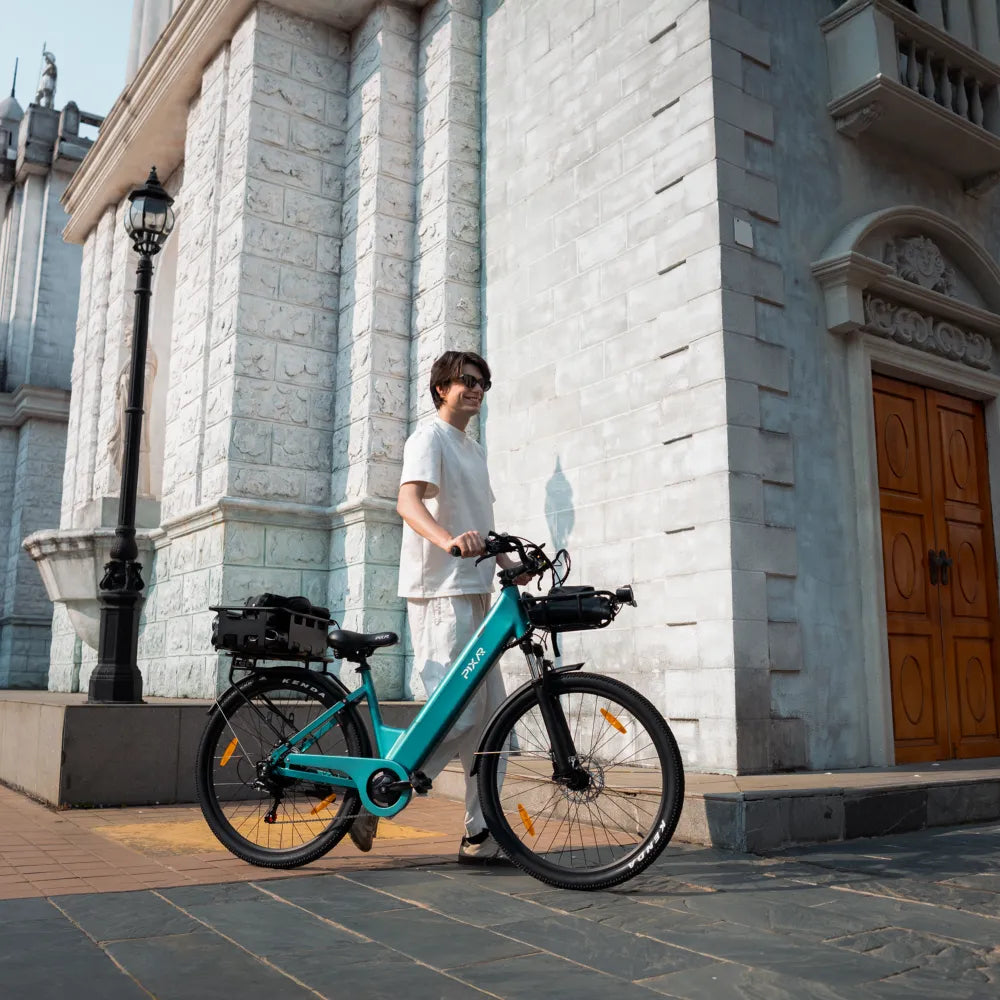
At first glance, the PIXAR C1 and C1 Pro are easy to confuse. They share the same low step frame, 250W rear hub motor, 45 Nm of torque, Shimano seven speed gearing and upright city riding position.
The differences are found in four areas: battery capacity, brakes, handlebar adjustment and weight.
The PIXAR C1 is the lighter and simpler option for regular city journeys. The PIXAR C1 Pro has a larger battery, hydraulic disc brakes and an adjustable handlebar, making it better suited to longer rides and riders who want more flexibility.
Neither bike is more powerful than the other. The C1 Pro simply adds more range and equipment.
This comparison explains what those upgrades mean in everyday use. For a broader introduction to frame design, battery size and riding comfort, read our guide on how to choose an electric bike for women.
PIXAR C1 and C1 Pro Compared
| Feature | PIXAR C1 | PIXAR C1 Pro |
|---|---|---|
| Motor | 250W rear hub motor | 250W rear hub motor |
| Torque | 45 Nm | 45 Nm |
| Assisted top speed | 25 km/h | 25 km/h |
| Battery | Samsung 36 V 13 Ah | Samsung 36 V 18 Ah |
| Maximum claimed range | Up to 120 km | Up to 150 km |
| Brakes | Mechanical disc brakes | Hydraulic disc brakes |
| Bike weight | 30.4 kg | 32.9 kg |
| Handlebar | Standard riser handlebar | Adjustable angle |
| Best suited to | Regular city commuting | Longer rides and fewer charges |
Both models also use 27.5 inch tyres and 80 mm front suspension. The basic riding experience is therefore similar. The decision mainly comes down to whether you need the larger battery and hydraulic brakes enough to accept the additional 2.5 kg.
PIXAR C1: A Practical Choice for Everyday Riding

The C1 is designed around the journeys most city riders make regularly: commuting to work, shopping, visiting friends and taking relaxed rides at the weekend.
Its Samsung 36 V 13 Ah battery has a maximum claimed range of up to 120 km. That gives many commuters more than enough capacity for their daily route, especially when the battery can be charged at home.
The C1 weighs 30.4 kg, making it 2.5 kg lighter than the C1 Pro. The difference is not especially noticeable once the motor is assisting, but it matters when the bike has to be pushed through a doorway, turned inside a storage room or guided into a lift.
The C1 is likely to be the better choice when:
- your daily route is fairly predictable;
- you have convenient access to charging;
- most journeys take place in town;
- you prefer the lighter bike;
- mechanical disc brakes meet your needs.
For riders who do not need the larger battery or hydraulic brakes, the C1 keeps the specification focused on everyday use.
PIXAR C1 Pro: More Range and More Adjustment

The C1 Pro is aimed at riders who regularly travel farther or prefer to charge less often.
Its Samsung 36 V 18 Ah battery increases the maximum claimed range to 150 km. The additional capacity is useful when a commute includes hills, extra stops or several journeys between charges.
The Pro model also uses hydraulic disc brakes. Compared with the mechanical brakes on the C1, they offer a smoother feel at the levers and normally require less hand pressure.
An adjustable handlebar angle provides more freedom to change the riding position. This can help riders who prefer a more upright posture or want to reduce the reach to the grips.
The C1 Pro is likely to be the better choice when:
- your daily distance changes regularly;
- you cannot always charge during the day;
- you often combine commuting with shopping or other stops;
- you prefer hydraulic disc brakes;
- you want more control over the handlebar position.
The larger battery and additional equipment increase the weight to 32.9 kg. It is therefore best suited to a garage, an accessible bike room or a building with lift access.
Do They Have the Same Motor?
Yes. Both models use a 250W rear hub motor and produce 45 Nm of torque.
The C1 Pro is not faster and does not provide more motor power on hills. Its larger battery simply allows the motor to provide assistance for longer before the next charge.
On a typical city route, the level of support from the two bikes will feel similar. The main advantage of the C1 Pro appears on longer journeys, where the additional battery capacity provides a larger reserve.
How Much Range Do You Actually Need?
The C1 is listed with a maximum range of up to 120 km, while the C1 Pro is listed at up to 150 km.
These figures are useful for comparison, but actual range changes with the assistance level, hills, temperature, wind, rider weight, cargo and tyre pressure.
A better way to choose is to calculate your usual return journey and consider how often you can charge.
If your daily distance is consistent and the battery can be charged at home, the C1 should provide a comfortable reserve for many city commutes.
The C1 Pro becomes more useful when journeys are longer, charging is less convenient or the route frequently changes during the day.
Our guide to choosing a commuter ebike explains how distance, charging access, cargo and storage affect the choice.
Mechanical and Hydraulic Disc Brakes
The C1 uses mechanical disc brakes. They provide familiar and dependable braking for regular city riding.
The C1 Pro uses hydraulic disc brakes. Their smoother lever action can be useful in busy traffic, on longer descents or when the bike is carrying additional weight.
Hydraulic brakes may also suit riders who prefer to use less hand pressure when slowing down. This can make frequent stopping feel more comfortable.
For calmer routes and ordinary commuting, the mechanical brakes on the C1 remain a practical setup. The C1 Pro is the better choice when braking feel is an important part of the decision.
The Weight Difference Matters at Home
The C1 weighs 30.4 kg, while the C1 Pro weighs 32.9 kg.
Electric assistance reduces the importance of that difference while riding. It becomes more noticeable when parking, storing or moving the bike without the motor.
Before choosing, consider whether the bike needs to:
- pass through a narrow entrance;
- turn inside a small storage room;
- move over a step or kerb;
- fit into a lift;
- be loaded onto a vehicle rack.
The C1 is easier to manage in confined spaces. The C1 Pro requires a little more effort, but the additional weight comes with the larger battery and hydraulic braking system.
Both batteries are removable, allowing them to be charged indoors. Removing the battery also makes either bike easier to move.
Neither model is intended for regular stair carrying.
For riders who are returning to cycling later in life, bike weight and brake lever feel can be just as important as range. Our guide to ebikes for women over 60 covers these points in more detail.
Do the C1 and C1 Pro Fit Differently?
The two models share the same general low step frame design and offer a similar upright riding position.
The main difference is the adjustable handlebar on the C1 Pro. It allows the grips to be moved closer or set higher, giving riders more freedom to fine tune their posture.
This may be useful on longer rides or for riders who want less pressure on their hands and shoulders. The standard C1 position will already suit many city riders without further adjustment.
Both frames are designed to make mounting and stopping easier. Our guide to the best step through ebikes for women explains how frame access, saddle position and riding comfort work together.
Shorter riders should also check saddle height and handlebar reach rather than relying only on the low frame. See our guide to choosing an ebike size for short women.
Which Model Suits Your Routine?
Regular commuting with home charging
The C1 is the more practical choice. It provides the same motor support as the Pro and has enough battery capacity for many daily journeys.
Longer commutes or limited charging access
The C1 Pro offers more battery reserve, making it easier to complete longer return journeys without planning a charge during the day.
Busy traffic and frequent stopping
The hydraulic disc brakes on the C1 Pro provide a smoother feel at the levers and may be more comfortable when braking often.
Limited storage space
The C1 is lighter and easier to move by hand. This can make a noticeable difference when the bike must pass through a narrow entrance or be turned inside a small room.
Commuting with shopping and errands
Both models work well for daily errands. The C1 suits shorter and more predictable routes, while the C1 Pro provides more reserve when several journeys are combined in one day.
Is the C1 Pro Worth the Upgrade?
The C1 Pro is worth choosing when the larger battery, hydraulic brakes or adjustable handlebar will make a clear difference to your daily riding.
For a longer commute or fewer charging opportunities, the additional battery capacity is useful. For frequent stops, the hydraulic brakes offer a more refined feel. For riders who are sensitive to handlebar reach, the extra adjustment may improve comfort.
The C1 remains the better choice when your routes are moderate, charging is simple and you prefer the lighter bike.
The two models are not aimed at completely different riders. They share the same city focused foundation, with the C1 Pro adding features for longer and more demanding days.
Frequently Asked Questions
Does the C1 Pro have a more powerful motor?
No. Both models use a 250W rear hub motor with 45 Nm of torque.
Which model has the longer range?
The C1 Pro has a maximum claimed range of up to 150 km. The C1 is listed at up to 120 km. Actual range depends on riding conditions and assistance level.
Are the batteries removable?
Yes. Both models use removable Samsung batteries that can be charged separately from the bike.
Which model is lighter?
The C1 weighs 30.4 kg. The C1 Pro weighs 32.9 kg, making the C1 2.5 kg lighter.
Which model is better for commuting?
The C1 suits regular city commuting with convenient charging. The C1 Pro is better suited to longer routes, fewer charging opportunities and riders who prefer hydraulic brakes.
Does the C1 Pro have a larger frame?
No. The two bikes share the same general frame design. The C1 Pro offers more handlebar adjustment rather than a larger frame.
C1 or C1 Pro?
Choose the PIXAR C1 for regular city journeys, convenient home charging and easier handling around your storage space.
Choose the PIXAR C1 Pro for longer routes, more battery reserve, hydraulic disc brakes and greater control over the handlebar position.
Both models offer the same motor support and accessible city frame. The right choice depends on how far you ride, how often you charge and how the bike needs to fit into your daily routine.
Explore the full PIXAR city ebike collection to compare available models, colours and configurations.







Leave a comment
This site is protected by hCaptcha and the hCaptcha Privacy Policy and Terms of Service apply.